
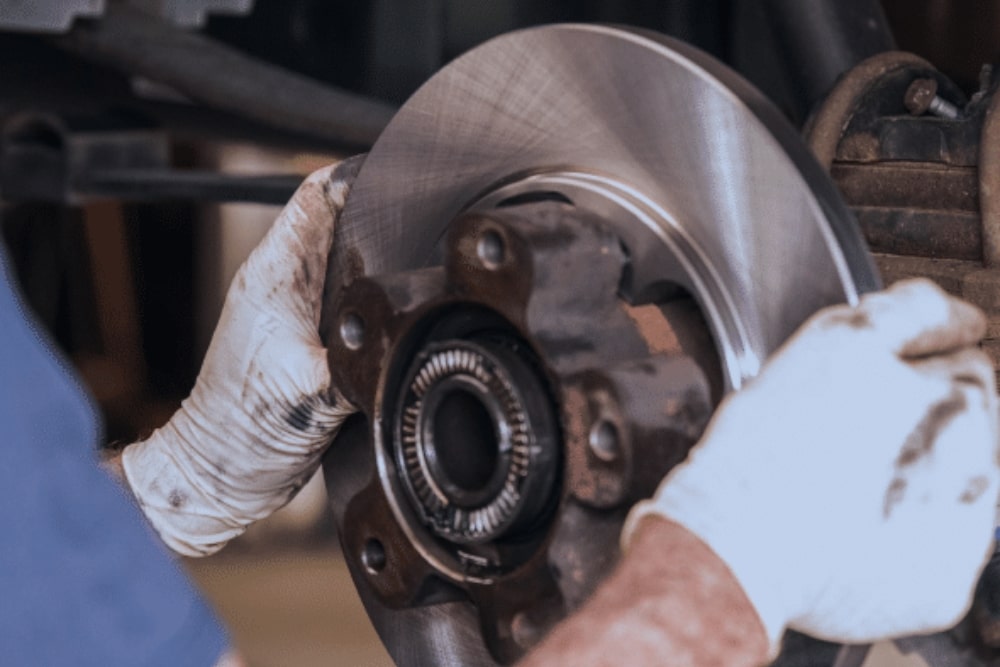
Your brakes might look fine, but beneath that surface rust lies winter damage that progresses faster than most Chicopee drivers realize. Road salt triggers an electrochemical reaction that aggressively corrodes brake lines and components. Combined with moisture freezing inside calipers and constant temperature cycles stressing metal parts, mid-winter creates the most challenging season for maintaining safe brake performance. E&G Automotive has served this community since 1991, educating drivers about these hidden threats.
We’re breaking down how salt, moisture, and temperature attack your braking system, the critical warning signs you shouldn’t ignore, and why fleet operators face multiplied challenges. You’ll discover why waiting until spring for brake service increases your risk, and how preventative maintenance saves both money and lives on winter roads.
The Triple Threat: How Winter Attacks Your Brakes
Road Salt Corrosion
Road salt melts ice effectively, but it’s extremely corrosive to your vehicle’s brake components. When salt spray kicks up from the road, it coats your brake rotors, calipers, brake lines, and hardware, creating an electrochemical reaction that accelerates rust at an alarming rate.
Salt damage shows up as:
- Pitted and rusted brake rotors that reduce stopping power
- Corroded brake lines that can develop dangerous leaks
- Seized caliper slide pins preventing proper brake pad contact
- Weakened brake hardware causing rattling or uneven wear
- Surface rust creating pulsing or vibration when braking
Moisture and Freezing
Moisture from melting snow, rain, or humidity penetrates your brake system and freezes, causing multiple problems. Water that seeps into brake calipers can freeze overnight, preventing the caliper pistons from retracting properly.
Brake fluid naturally absorbs moisture from the air over time. When contaminated brake fluid freezes or becomes sluggish in cold temperatures, you might notice a spongy brake pedal feel, or your stopping distance could increase dramatically.
Temperature Swings
Mid-winter in Massachusetts brings frequent freeze-thaw cycles where daytime temperatures climb above freezing, only to plummet overnight. When metal brake parts expand in warmer temperatures and contract when they freeze again, this constant movement can loosen hardware, create gaps where moisture enters, and accelerate fatigue in brake materials.
Warning Signs Your Brakes Need Immediate Attention in Chicopee
Your vehicle communicates brake issues through several distinct warning signs that you shouldn’t ignore.
Critical indicators to watch for:
- Unusual Noises: Squealing, grinding, or scraping sounds when applying brakes
- Pedal Problems: Vibration, pulsing, spongy feel, or pedal sinking to the floor
- Vehicle Behavior: Pulling to one side when braking or increased stopping distance
- Visual Clues: Visible rust or corrosion on brake rotors through wheel spokes
- Dashboard Warnings: Brake warning light illuminated
- Burning Smell: Noticeable after driving or braking
Any of these symptoms demands immediate inspection. The longer you wait, the more damage occurs, and the more expensive the repairs become.
Don’t ignore the warning signs. Visit E&G Automotive at 159 Granby Rd, Chicopee, MA 01013, or call us at 413-474-6791 to schedule your brake safety inspection today.
Fleet Operators Face Multiplied Winter Brake Challenges in West Springfield
Fleet managers deal with unique winter brake pressures. When you’re responsible for multiple vehicles accumulating miles quickly across Hampden County, brake maintenance becomes critical.
Commercial vehicles face accelerated wear because they cover more miles, carry heavier loads, make frequent stops, and park outdoors without garage protection. A small brake issue in one van can lead to vehicle downtime and safety liability.
E&G Automotive provides comprehensive fleet brake maintenance for light-duty vehicles, including Ford Transit vans and Mercedes Sprinter vans commonly used by commercial fleets throughout Hampden County. Our services include scheduled inspections, preventative maintenance programs, and priority scheduling to minimize downtime.
Professional Brake Inspection and Repair in Chicopee, MA
At E&G Automotive, our brake inspection process is thorough and transparent. We’ve been serving the community since 1991, building our reputation on quality work.
Our Inspection Process
- Step 1: Initial Assessment
We greet you immediately and discuss your specific concerns. - Step 2: Digital Vehicle Inspection
Our technicians perform a complete brake system evaluation using AutoFlow Digital Vehicle Inspections, taking detailed photos and videos. - Step 3: Transparent Communication
We text or email these inspection results directly to you, so you can see exactly what our technicians found. - Step 4: Clear Pricing
We explain everything clearly and provide accurate pricing before starting any work. No surprises, no pressure.
Comprehensive Brake Services
- Brake pad replacement with quality materials
- Brake rotor turning and replacement using precision equipment
- Brake caliper replacement
- Brake line inspection and replacement
- Brake fluid flush and replacement
- ABS diagnostics and repair with OEM scan tools
- Parking brake adjustment and repair
When needed, we use our John Bean alignment machine to verify wheel alignment as part of your brake service. Our team includes ASE-certified technicians, including ASE Master-certified expertise, ensuring every repair meets professional standards.
Why Choose E&G Automotive for Winter Brake Repair in Springfield
Customer service sets us apart. Our third-generation automotive experience means we’ve seen virtually every type of brake problem that New England winters can create.
What makes us different:
- Expertise: Our ASE-certified technicians ensure every repair meets professional standards
- Transparency: Digital Vehicle Inspections show you exactly what’s wrong
- Quality Guarantee: 3-year/36,000-mile warranty on repairs
- Convenience: Shuttle service, loaner vehicles, and after-hours drop box
- Flexibility: Financing available through CFNA
- Comprehensive Care: One-stop shop for all automotive needs
We’re committed to educating you about proper brake maintenance so you can make informed decisions. Our service advisors take time to explain brake system function and what you can do to extend the life of your brake components.
Preventative Maintenance to Avoid Mid-Winter Brake Emergencies
The best time to address brake concerns is before they become emergencies. Regular brake maintenance helps prevent the compounding effects of winter damage.
Essential preventative measures:
- Annual Brake Fluid Flush: Removes moisture contamination
- Regular Pad Checks: Monitor thickness before critical wear occurs
- Rotor Measurement: Identify warping or excessive wear early
- Hardware Lubrication: Prevent seizing in caliper slide pins
- Brake Line Inspection: Catch corrosion before dangerous leaks develop
Our technicians also check related systems that affect brake performance, including suspension components, tire condition, and wheel alignment.
FAQs About Winter Brake Problems and Repair
What causes brake rotors to rust so quickly in winter?
Road salt combined with moisture creates an electrochemical reaction that accelerates rust formation on brake rotors. This corrosion happens rapidly because rotors are exposed directly to salt spray, and constant wet-dry cycles speed up the oxidation process.
Why do my brakes squeal more in cold weather?
Cold temperatures cause brake pad materials to harden temporarily, which creates squealing sounds until the brakes warm up. Surface rust that forms on rotors overnight can also cause squealing during the first few stops of the day.
How often should brake fluid be changed in winter climates?
Brake fluid should be flushed every two to three years in winter climates because it absorbs moisture over time. Contaminated brake fluid can freeze or become sluggish in cold temperatures, reducing brake performance and potentially causing system damage.
Can road salt damage brake lines?
Yes, road salt is extremely corrosive to steel brake lines and can cause them to rust through completely. This is particularly dangerous because brake line failure results in sudden loss of braking ability, making regular inspections essential for winter driving safety.
What’s the difference between brake pad wear in summer versus winter?
Winter brake pad wear is typically more aggressive due to road salt contamination, moisture exposure, and temperature fluctuations. Salt acts as an abrasive that accelerates pad wear, while moisture can cause uneven wear patterns faster than summer conditions.
Schedule Your Brake Inspection in Chicopee Today
Winter brake problems don’t improve on their own. Whether you’re hearing unusual noises, feeling vibrations, or simply want peace of mind, we’re here to help.Visit us at E&G Automotive, 159 Granby Rd, Chicopee, MA 01013, or call 413-474-6791 to schedule your comprehensive brake inspection. We serve drivers throughout Chicopee, Springfield, Holyoke, West Springfield, and Agawam with the professionalism and courtesy you deserve.