
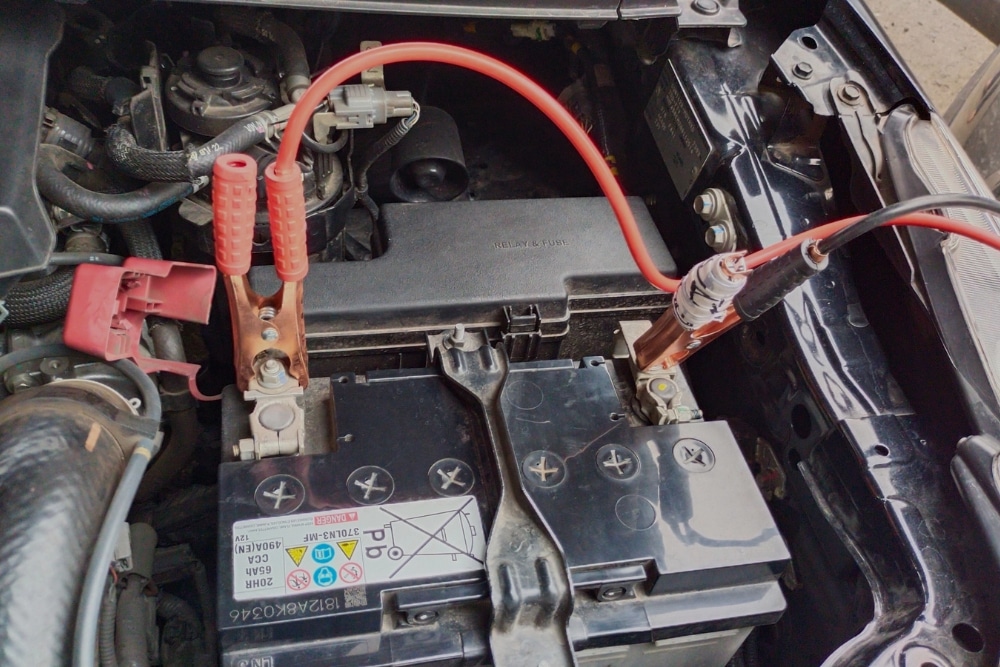
Every winter, the same conversation happens at E&G Automotive in Chicopee: “My battery was fine yesterday, and now my car won’t start.” The reality is your battery wasn’t fine yesterday, winter just forced it to show its true condition. When temperatures plunge, your battery’s chemical reaction slows to a crawl, cutting power output in half while thick, cold oil makes your engine fight twice as hard to turn over. It’s a perfect storm that separates strong batteries from weak ones in seconds.
In this guide, we’ll walk you through why cold weather is so merciless on batteries, identify early warning signs that predict failure, expose sneaky battery killers beyond temperature, and show what professional diagnostics reveal that simple tests miss. By the end, you’ll know how to avoid becoming another stranded statistic this winter.
The Science Behind Cold Weather Battery Failure
Your car’s battery generates electrical power through a chemical reaction between lead plates and sulfuric acid. When temperatures plummet, this chemical reaction slows down dramatically, reducing the battery’s ability to deliver the cranking amps needed to turn over your engine.
Here’s what happens to your battery at different temperatures:
- 80°F: Battery operates at 100% capacity
- 32°F: Battery loses 35% of its strength
- 0°F or below: Battery loses up to 60% of its power
At the same time, cold oil thickens inside your engine, creating significantly more resistance. Your starter motor needs roughly twice as much power to turn over a cold engine compared to a warm one. This creates a perfect storm: your battery has less power to give precisely when your engine needs more power to start.
Five Warning Signs Chicopee Drivers Shouldn’t Ignore
Before your battery fails completely, it usually sends warning signals. Recognizing these signs early gives you the opportunity to address the problem before you’re stuck in a parking lot on a single-digit morning.
- Slow Engine Cranking: If your engine turns over more slowly than usual, especially on the first start of the day, your battery is struggling to deliver adequate power.
- Dimming Headlights: When you turn on your headlights while the engine is off, they should remain bright. Noticeably dim or weak lights signal your battery may not be holding a proper charge.
- Electrical Quirks: Radio resetting, power windows moving slowly, or dashboard lights flickering can indicate battery or charging system problems.
- Battery Age Over Three Years: Most car batteries last between three to five years. If your battery is approaching or has exceeded this range, winter will likely be the final straw.
- Corrosion Buildup: White, blue, or greenish powder around your battery terminals creates resistance and reduces the battery’s ability to transfer power effectively.
The Hidden Battery Killers Most Drivers Ignore
While everyone knows cold weather is hard on batteries, several sneaky factors contribute to winter battery failure that catch drivers off guard.
The Death by a Thousand Short Trips
If you primarily make short trips around Chicopee, your battery may never fully recharge between starts. Each start draws significant power, and the alternator needs time to replace that energy. When you only drive five or ten minutes at a time, especially with heated seats, defrosters, and blowers running, your battery gradually loses charge over days and weeks.
Internal Degradation and Charging System Problems
Every time your battery charges and discharges, the internal plates undergo slight changes. By the time a battery reaches three years old, it has significantly less reserve capacity than when it was new. Winter simply exposes this gradual decline.
Your alternator recharges your battery while you drive, but if it’s undercharging or overcharging, your battery suffers. An undercharging alternator leaves your battery in a constant state of partial discharge, while overcharging causes excessive heat and can boil away the electrolyte solution.
The Invisible Power Drain
Modern vehicles have computers, alarm systems, and other electronics that draw small amounts of power even when the car is off. If these systems malfunction, they can drain a healthy battery overnight. This parasitic drain often goes unnoticed until winter arrives and suddenly your battery can’t recover from the constant slow discharge.
Why Professional Diagnostics Beat Guesswork
Many drivers assume a no-start situation automatically means they need a new battery, but that’s not always the case. A proper diagnostic approach examines the entire electrical system to identify the true culprit.
A comprehensive battery diagnostic should measure:
- Cold cranking amps (CCA) rating at 0°F
- Battery’s current state of charge
- Alternator output and charging performance
- Parasitic drain testing
- Starter motor draw and performance
- Terminal connection quality
Even a fully charged, healthy battery can’t deliver power through corroded terminals. The white or blue-green buildup you sometimes see on battery posts creates electrical resistance. In winter, when every amp counts, corroded connections can be the difference between starting and being stranded.
Winter Battery Maintenance Tips for Western Massachusetts Drivers
You can take practical steps to extend your battery’s life and reduce the risk of winter breakdowns without spending a fortune.
- Test Your Battery Before the Coldest Months Ahead: January and February bring Western Massachusetts’s harshest cold. A professional load test now can reveal whether your battery has the strength to make it through the rest of winter, giving you time to replace it before the deep freeze rather than during a roadside emergency.
- Keep Terminals Clean and Protected: Check your battery posts and cable connections monthly. If you see any corrosion, clean it with a mixture of baking soda and water, then apply a protective spray or grease.
- Take Longer Drives Weekly: If you typically make short trips, plan a longer drive once a week to give your battery time to fully recharge. A 20 to 30-minute highway drive helps maintain battery health.
- Reduce Electrical Load During Starting: Turn off your heater, radio, lights, and other accessories before starting your engine. This reduces the electrical demand during cranking.
- Consider a Battery Tender for Stored Vehicles: If you have a vehicle you don’t drive daily, a battery tender maintains the charge level and prevents gradual discharge.
Expert Battery Solutions in Chicopee
At E&G Automotive, we’ve been serving Chicopee drivers since 1991, and we understand the unique challenges our local winters present. Our approach to electrical diagnostics goes beyond simply installing a new battery. We perform comprehensive testing to identify the root cause of your electrical issues, ensuring you get the right solution the first time.
What sets our diagnostics apart:
- ASE-certified technicians with Master Technician expertise on staff
- OEM scan tools for accurate diagnostics on specific vehicle makes
- Complete charging system analysis, not just battery testing
- Digital Vehicle Inspection with photos and videos of findings
- 3-year/36,000-mile warranty backing our work
Our team treats everyone as we would like to be treated ourselves, which means honest assessments, clear explanations, and no unnecessary services. We’re a one-stop shop for auto repair and maintenance needs.
Available services include:
- Pickup and drop-off service
- Shuttle service
- Loaner vehicles
- After-hours drop box
- Comfortable waiting area
Visit us at 159 Granby Rd, Chicopee, MA 01013, or call 413-474-6791 to schedule your winter battery diagnostic today.
When to Seek Professional Help
Certain situations warrant immediate expert attention rather than waiting to see if the problem resolves itself.
Get professional diagnostics if you experience:
- Vehicle fails to start even after jump-starting
- You’re jump-starting more than once a month
- Battery is more than three years old and showing symptoms
- Intermittent electrical problems throughout the vehicle
- Dashboard warning lights related to charging system
Modern vehicles have complex electrical systems that interact with nearly every function of your car. Our AutoFlow Digital Vehicle Inspection system lets you see photos or videos of what we find during your inspection. You’ll understand exactly what’s happening with your battery, alternator, and electrical connections.
FAQs About Winter Battery Failure and Diagnostics
How cold does it have to be for a car battery to die?
A healthy, fully charged battery can typically handle temperatures well below zero, but a weak or aging battery may fail at temperatures around 32°F or slightly below. The colder it gets, the more power your battery loses while your engine simultaneously requires more power to start.
Can a completely dead battery be recharged?
In many cases, yes, but it depends on why the battery died and how long it remained discharged. If a battery was simply drained by leaving lights on, it can usually be recharged. However, if the battery died due to internal failure or remained deeply discharged for an extended period, replacement will be necessary.
How often should I replace my car battery?
Most car batteries need replacement every three to five years, depending on driving conditions, climate, and maintenance. In areas with harsh winters like Chicopee, batteries often trend toward the shorter end of this range. Regular testing after the three-year mark helps you replace your battery proactively.
What is the difference between battery testing and battery diagnostics?
Battery testing typically refers to a simple voltage or load test that determines if a battery is good or bad. Battery diagnostics is more comprehensive, examining the battery’s capacity, the charging system’s performance, parasitic drains, and the overall health of your vehicle’s electrical system.
Can extreme cold permanently damage a car battery?
Yes, extreme cold can cause permanent damage, especially to a battery that’s already weak or partially discharged. When a battery’s electrolyte solution freezes, it can crack the battery case or damage the internal plates. A fully charged battery is much more resistant to freezing.
Schedule Your Winter Battery Diagnostics in Chicopee Today
Don’t wait until a frigid morning leaves you stranded with a dead battery. E&G Automotive’s comprehensive electrical diagnostics identify battery and charging system problems before they turn into emergencies. Our ASE-certified technicians use professional equipment and decades of experience to give you accurate assessments and reliable solutions.
Visit us at 159 Granby Rd, Chicopee, MA 01013, or call 413-474-6791 to schedule your winter battery diagnostic. We’re your trusted one-stop shop for auto electrical repair in Chicopee, and we’re here to keep you safely on the road all winter long.