If your temperature gauge is creeping into the red this summer, don’t wait to get it checked. Engine overheating is one of the most damaging things that can happen to your vehicle, and the hot Massachusetts summers make it even more likely to happen when you least expect it. At E&G Automotive in Chicopee, MA, we see a spike in cooling system calls every June through August because rising temperatures don’t just make you uncomfortable – they push already-stressed cooling systems past their limits.
The good news is that most overheating problems come with clear warning signs before they turn into costly engine damage. Knowing what to look for, and getting it handled quickly, can be the difference between a simple repair and a full engine replacement.
Why Summer Heat Puts Extra Stress on Your Engine
Your engine already generates a tremendous amount of heat just by running, and your cooling system works constantly to manage it. Summer changes the equation fast. Here’s why:
- Higher outside temps make it harder for your radiator to release heat into the air
- Stop-and-go traffic reduces airflow through the radiator, forcing the cooling fan to carry more of the load
- Highway driving and road trips push the engine harder for longer stretches
- An already-stressed system can fail under the extra summer load even if it seemed fine in cooler months
The result? A warped cylinder head, a blown head gasket, or damage that requires a full engine replacement.
The Most Common Cooling System Problems in Summer
Your cooling system has a tough job even on a mild day. But when summer temperatures climb here in Chicopee and Springfield, small vulnerabilities become big problems fast. These are the most common culprits we see when drivers roll in with an overheating engine.
Low or Depleted Coolant
Coolant doesn’t just evaporate on its own, but small leaks in hoses, the radiator, or the water pump can slowly drain your system over time. By summer, what started as a minor drip can leave your engine dangerously low. Low coolant means less ability to absorb and transfer heat – and that’s a problem that gets worse the hotter it gets outside.
A Failing or Leaking Radiator
The radiator is where all that absorbed heat gets released into the air. A clogged, corroded, or leaking radiator can’t do its job properly, which means heat stays trapped in your engine longer than it should. Older vehicles, or those that haven’t had regular coolant flushes, are especially prone to radiator problems.
Worn or Cracked Coolant Hoses
Coolant hoses carry fluid between your engine and radiator. Over time, heat and pressure cause them to crack, swell, or develop weak spots. A hose failure can dump your coolant fast – sometimes in the middle of traffic. If you haven’t had your hoses inspected recently, summer is the time to do it.
A Weak or Failing Water Pump
The water pump is what keeps coolant circulating through the system. If the pump is worn, leaking, or the impeller is damaged, the coolant stops moving properly. A sluggish water pump can be hard to spot without the right diagnostic equipment, but it’s one of the more common reasons vehicles overheat on the highway.
A Malfunctioning Cooling Fan
When you’re sitting in traffic, and your car isn’t moving fast enough for airflow to cool the radiator naturally, the cooling fan takes over. If the fan isn’t spinning at the right speed – or at all – your engine temperature climbs fast in stop-and-go conditions. Fan motor failures or faulty fan relays are more common than most drivers realize.
Warning Signs of an Overheating Engine Chicopee Drivers Should Watch For
Your vehicle gives you signals before a minor cooling problem becomes a major breakdown. Here are the ones you shouldn’t ignore:
- Temperature Gauge Rising Toward the Red: If your temperature gauge moves out of the normal range during summer driving, treat it as an urgent signal. Don’t assume it will cool down on its own.
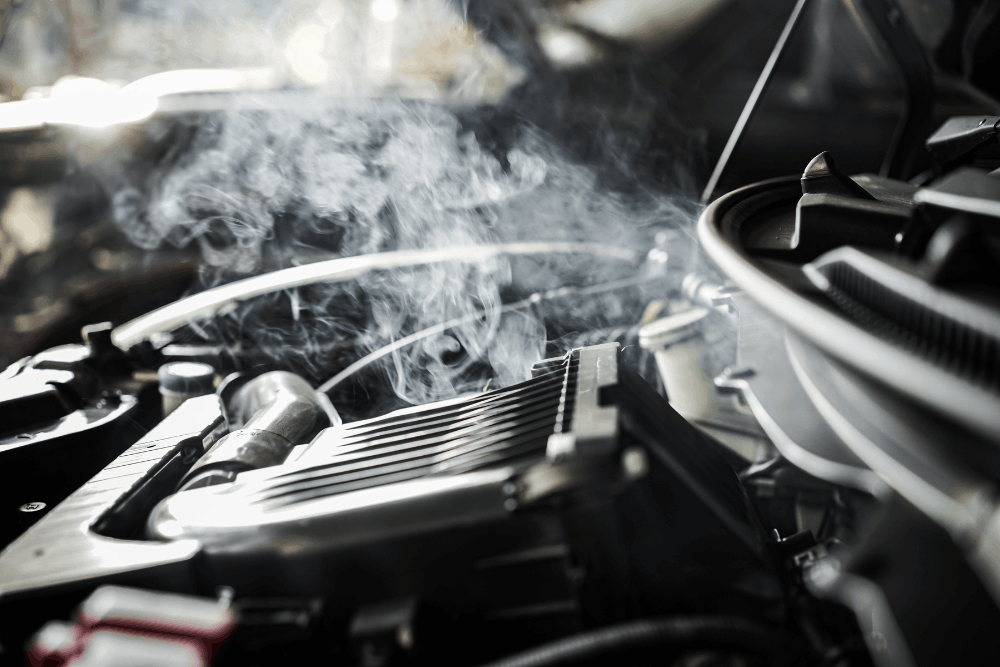
- Steam Coming From Under the Hood: This means your coolant is already boiling or leaking onto hot engine components. Pull over, turn the engine off, and do not open the hood immediately.
- A Sweet or Unusual Smell: Coolant has a distinct sweet smell. If you notice it inside or outside your car while driving, there’s a good chance you have a coolant leak somewhere in the system.
- The Heater Blowing Cold Air: If your heater blows cold air even when set to heat, it can be a sign that your coolant level is critically low.
- Loss of Power or a Knocking Noise: Severe overheating can cause your engine to knock, run rough, or lose power. Stop driving as soon as it’s safe and get it checked.
How Shops Diagnose Engine Overheating
When you bring your vehicle in, a good shop won’t just guess. Technicians use a thorough inspection process to find the root cause before recommending any repairs. Here’s what that typically looks like:
- Check coolant level and condition
- Inspect hoses, radiator, and water pump for leaks
- Test the thermostat for proper function
- Evaluate cooling fan operation
- Run a full diagnostic scan when the root cause isn’t immediately visible
Cooling System Maintenance That Prevents Overheating
The best engine overheating repair is one you never need. Regular maintenance of your vehicle’s cooling system dramatically reduces the chance of a summer breakdown.
Here’s what we typically check and recommend:
- Coolant level and condition: Old, contaminated, or low coolant can’t protect your engine properly. Most manufacturers recommend a coolant flush and refill on a regular schedule. Ask our team, and we’ll let you know what’s recommended based on your vehicle’s mileage and condition.
- Hose inspection: Hoses that look fine on the outside can be soft, cracked, or brittle on the inside. Hose condition isn’t always visible from the outside, so our technicians inspect them as part of every cooling system check.
- Radiator condition: Buildup, corrosion, and small leaks are often visible during a routine inspection – before they become a roadside emergency.
- Thermostat function: A stuck-closed thermostat prevents coolant from circulating properly and is a surprisingly common cause of overheating.
- Water pump: Signs of wear or a slow weep can be caught early during a preventative inspection.
If it’s been a while since your cooling system was looked at, or if you’re planning a road trip through Massachusetts this summer, schedule a fluid exchange service so we can check everything before the heat catches up with you.
Why Chicopee Drivers Trust E&G Automotive for Engine Overheating Repair
We know you have options when it comes to auto repair in Chicopee, and we don’t take your trust for granted. Here’s what we hear most often from the drivers who keep coming back to us:
- Honest communication: We explain what we found, what it means, and what it’ll cost – before we start.
- ASE-certified technicians: Our team includes ASE-certified techs, and our owner holds the AC Delco Technician of the Millennium recognition from 2000.
- OEM diagnostic tools: We use manufacturer-specific scan tools for accurate diagnosis, especially on Asian and domestic vehicles.
- Real convenience: Loaner vehicles, shuttle service, pickup and drop-off, and an after-hours drop box make it easy to fit a repair into your schedule.
- Financing available: We offer financing through CFNA for when repairs add up faster than expected.
- Family-owned since 1991: Three generations of automotive experience and a core value that hasn’t changed: “We treat everyone as we would like to be treated ourselves.”
Serving Chicopee, Springfield, Holyoke, West Springfield, and the Surrounding Area
We work on Toyota, Honda, Nissan, Hyundai, Kia, GM vehicles, Ford vehicles, and Chrysler vehicles. If you’re a multi-car family in Chicopee, Holyoke, West Springfield, Springfield, or Agawam, we’re the shop that handles it all under one roof, so you don’t have to juggle appointments at three different places.
FAQs About Engine Overheating Repair in Chicopee, MA
Why does my car overheat during hot weather?
Hot weather reduces your cooling system’s ability to release heat through the radiator because the outside air temperature is already elevated. This forces your cooling system to work harder than normal, and any existing weakness – a small leak, low coolant, a marginal thermostat – becomes a problem faster than it would in cooler conditions.
What are the warning signs of an overheating engine?
The most common warning signs are a rising temperature gauge, steam coming from under the hood, a sweet smell from the coolant, the heater blowing cold air when set to heat, and unusual knocking or power loss. Any one of these is enough reason to get your vehicle inspected before driving further.
Can I drive a car that is overheating?
No. Driving an overheating vehicle, even a short distance, can cause permanent engine damage, including a warped head or blown head gasket. If your temperature gauge spikes, pull over safely, turn the engine off, and contact a repair shop before driving again.
What causes coolant leaks in the summer?
Coolant leaks in the summer are often caused by cracked or deteriorating hoses, a failing radiator, or a weak water pump seal. Heat and pressure cycles speed up the wear on these components, and a small leak that was manageable in winter can turn into a serious problem as temperatures rise.
Where can I get engine overheating repair in Chicopee, MA?
Engine overheating repair in Chicopee is available at E&G Automotive, located at 159 Granby Rd, Chicopee, MA 01013. The shop handles cooling system diagnostics, radiator repair, coolant leak repair, hose replacement, and water pump service for Toyota, Honda, Nissan, Hyundai, Kia, and domestic vehicles.
Schedule Your Engine Overheating Repair in Chicopee, MA at E&G Automotive Today
Don’t let a cooling system problem sit until it becomes an engine replacement. If your temperature gauge is running high, you’re seeing steam, smelling coolant, or your vehicle just doesn’t feel right this summer, give us a call.
E&G Automotive is located at 159 Granby Rd, Chicopee, MA 01013. Call us at 413-474-6791 to schedule your appointment. We’ll take a look, tell you exactly what’s going on, and get you back on the road with confidence.